Why do some websites captivate instantly while others fade into obscurity? In 2025, with 1.2 billion websites online but only 17% actively maintained (W3Techs, 2025), choosing the right type is make-or-break. Users form opinions in 0.05 seconds, and 94% cite design as the top trust factor (VWO, 2025). Mismatch a portfolio with e-commerce needs, and you waste resources 60% of mobile users expect flawless responsiveness, or they’ll bounce (Hostinger, 2025).
At Web Guider, your web design and development agency, we’ve curated 10 website examples by type in 2025 like Shopify for e-commerce, Slack for business sites, Behance for portfolios, HubSpot Blog for content, and Mailchimp for landing pages to showcase what works. From startups to enterprises, find the best website types for your vision. Ready to build a winner? Let’s explore!
Why Understanding Website Types Matters for Success
Before diving into specific examples, grasping why website categorization matters prevents costly mistakes and accelerates your path to online success.

Different Goals Require Different Structures
Websites serve vastly different purposes. E-commerce platforms prioritize product discovery and checkout efficiency. Portfolio sites emphasize visual presentation and creative storytelling. Educational platforms focus on content delivery and learning progression. Using the wrong structure for your goals creates friction, confusing visitors and diminishing results.
User Expectations Vary by Category
Visitors arrive with preconceived notions about how different website types should function. They expect online stores to have shopping carts, blogs to display recent posts chronologically, and business sites to prominently feature contact information. Violating these expectations even with beautiful design creates disorienting experiences reducing trust and engagement.
Functionality Requirements Differ Dramatically
Each website type demands specific technical features. Membership sites need login systems and gated content. News platforms require content management systems supporting multiple authors. Directory sites need robust search and filtering capabilities. Understanding these requirements upfront ensures you choose platforms and tools supporting your actual needs.
Monetization Strategies Align with Types
Different website categories support different revenue models. E-commerce sites sell products directly. Content sites monetize through advertising or subscriptions. Service sites generate leads for consultation or project work. Selecting website types compatible with your intended business model proves essential for profitability.
SEO Strategies Adapt to Categories
Search engines evaluate different website types using varied criteria. E-commerce sites need product schema markup. Local business sites require NAP (name, address, phone) consistency and location signals. Content sites benefit from comprehensive topic coverage and freshness signals. Working with SEO optimization agency professionals who understand these nuances ensures maximum visibility.
How to Choose the Right Website Type
Before exploring specific examples, assess your needs using this framework:

Define Your Primary Objective
Ask: What’s the one thing this website must accomplish?
- Generate sales? → E-commerce
- Capture leads? → Business or landing page
- Showcase work? → Portfolio
- Share information? → Blog or educational
- Build community? → Forum or social
Identify Your Target Audience
Understanding who visits and what they need shapes appropriate website types. B2B buyers researching solutions need comprehensive information architectures. Creative directors seeking freelancers want stunning visual portfolios. Students accessing courses require intuitive learning management systems.
Consider Available Resources
Different website types demand varying time, budget, and expertise commitments. Simple portfolios launch quickly with minimal maintenance. E-commerce platforms require ongoing product management, inventory tracking, and customer service. Membership sites need consistent new content justifying subscriptions.
Plan for Growth
Choose website types accommodating future expansion. Starting with a simple blog doesn’t prevent adding e-commerce later. Beginning with a brochure site allows expanding into full business functionality. Selecting flexible platforms and scalable architectures prevents costly rebuilds as you grow.
Similar to how professional website design approaches vary based on objectives, choosing appropriate website types requires strategic thinking before creative execution.
15 Website Examples Across Major Categories
Let’s examine real-world examples demonstrating each website type’s characteristics, features, and effectiveness.
1. E-Commerce: Shopify
Website Type: E-commerce Platform
Primary Purpose: Selling physical and digital products online
Key Features:
- Product catalogs with detailed descriptions and imagery
- Shopping cart and secure checkout systems
- Payment gateway integrations (Stripe, PayPal, etc.)
- Inventory management and order tracking
- Customer account creation and management
- Mobile-responsive product browsing
What Makes It Effective:
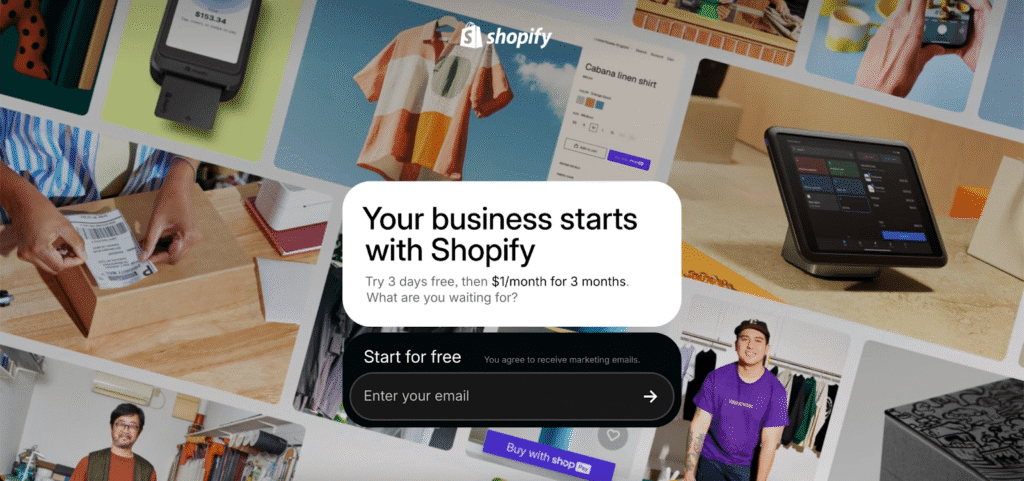
Shopify itself is an e-commerce platform, and their own site brilliantly demonstrates e-commerce best practices. Clear product categorization makes finding items effortless. High-quality product photography showcases items from multiple angles. Detailed descriptions answer questions before they arise. One-click checkout reduces cart abandonment. Customer reviews build trust and provide social proof.
Best For: Retailers selling physical products, digital download stores, subscription box services, dropshipping businesses, or anyone monetizing through direct product sales.
Why It Works: Shopify removes technical barriers, letting business owners focus on products and customers rather than coding and infrastructure management.
2. Business Website: Slack
Website Type: Corporate Business Site
Primary Purpose: Communicating company information, features, and value propositions to potential customers
Key Features:
- Clear value proposition immediately visible
- Product or service explanations with benefits
- Customer testimonials and case studies
- Pricing information and comparison tables
- About page with company story and team
- Contact information and inquiry forms
- Resource sections (blog, guides, documentation)
What Makes It Effective:
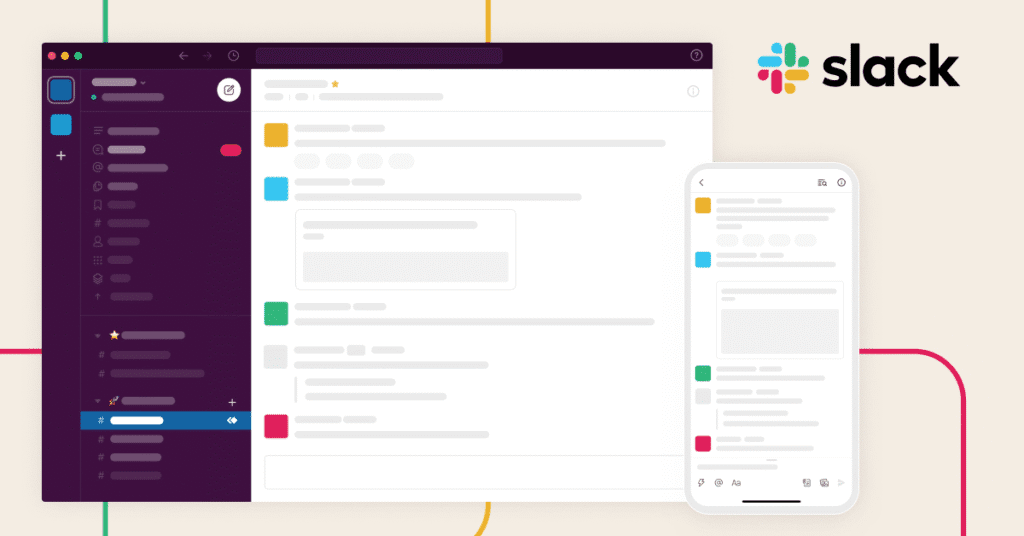
Slack’s website exemplifies effective business site design. The homepage immediately communicates what Slack does and who it serves. Visual demonstrations show the product in action. Customer logos showcase impressive clients. Clear pricing tiers help prospects make decisions. Comprehensive documentation supports customer success.
Best For: Service businesses, SaaS companies, consultancies, agencies, B2B organizations, or any business requiring lead generation and brand credibility.
Why It Works: The site balances information depth with navigational simplicity, guiding different visitor types toward relevant content without overwhelming anyone.
Working with web design services professionals ensures your business site communicates effectively while converting visitors into customers.
3. Portfolio: Behance
Website Type: Creative Portfolio Platform

Primary Purpose: Showcasing creative work to attract clients, employers, or admiration
Key Features:
- Visual project galleries with high-quality images
- Project descriptions explaining creative process
- Case studies demonstrating problem-solving
- About section with background and expertise
- Contact information for potential opportunities
- Testimonials or client feedback
- Resume or CV download options
What Makes It Effective:
Behance (Adobe’s creative network) hosts millions of portfolios demonstrating diverse approaches. The best portfolios combine stunning visual presentation with strategic thinking explanations. Rather than just showing finished work, top creators explain challenges faced, solutions developed, and results achieved positioning themselves as strategic partners, not just execution resources.
Best For: Designers, photographers, illustrators, writers, developers, architects, or any creative professional needing to demonstrate capabilities and attract opportunities.
Why It Works: Visual-first presentation immediately captures attention while depth of explanation satisfies those evaluating professional capabilities.
4. Blog: HubSpot Blog
Website Type: Content/Educational Blog
Primary Purpose: Sharing information, building authority, attracting organic traffic, and nurturing leads
Key Features:
- Reverse-chronological post listing
- Category and tag organization
- Author bylines and bios
- Comment sections for engagement
- Social sharing buttons
- Related post suggestions
- Email subscription options
- Search functionality
What Makes It Effective:
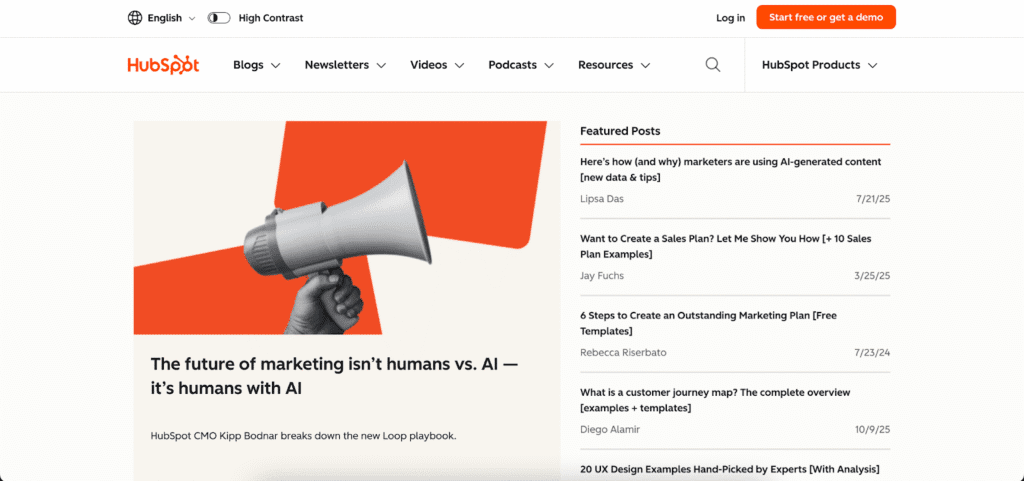
HubSpot’s blog demonstrates content marketing mastery. Comprehensive posts answer questions thoroughly. Clear categorization helps visitors find relevant topics. Strategic internal linking keeps readers engaged across multiple articles. Lead magnets (templates, tools, guides) convert readers into leads. Regular publishing maintains freshness and relevance.
Best For: Thought leaders, businesses using content marketing, individuals building personal brands, or anyone wanting to share expertise while attracting organic search traffic.
Why It Works: Consistent, valuable content builds audience trust over time, positioning publishers as authoritative resources worth following and eventually buying from.
5. Landing Page: Mailchimp Campaigns
Website Type: Conversion-Focused Landing Page

Primary Purpose: Driving single specific action (signup, purchase, download, registration)
Key Features:
- Singular focus without navigation distractions
- Compelling headline communicating core value
- Benefit-oriented copy addressing pain points
- Strong call-to-action buttons prominently placed
- Social proof (testimonials, user counts, logos)
- Visual hierarchy guiding attention toward conversion
- Mobile-optimized for all devices
What Makes It Effective:
Mailchimp’s campaign landing pages remove all distractions, focusing visitor attention entirely on desired actions. Every element headlines, imagery, copy, testimonials guides toward conversion. The pages load quickly, present information clearly, and make taking action obvious and effortless.
Best For: Product launches, lead generation campaigns, event registrations, webinar signups, special promotions, or any situation requiring focused conversion optimization.
Why It Works: Elimination of choices paradoxically increases conversions. When presented with one clear path forward, more visitors take it.
Understanding custom conversion principles transforms landing pages from informational to revenue-generating assets.
6. Educational: Khan Academy
Website Type: Online Learning Platform
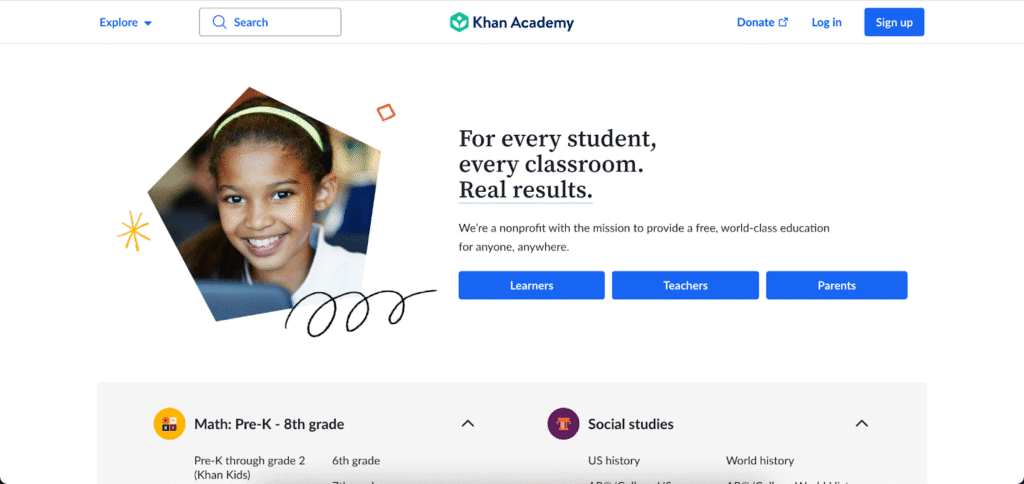
Primary Purpose: Delivering educational content and facilitating learning
Key Features:
- Course catalogs with detailed descriptions
- Learning management system functionality
- Progress tracking for students
- Video lessons and interactive exercises
- Assessment and quiz capabilities
- Student and instructor dashboards
- Certificate or completion recognition
- Discussion forums or support systems
What Makes It Effective:
Khan Academy revolutionized online education through accessible, comprehensive, free learning resources. Their platform structures complex subjects into digestible lessons. Progress tracking motivates continued learning. Practice exercises reinforce concepts. The interface remains intuitive despite vast content libraries, letting learners focus on education rather than navigation.
Best For: Educational institutions, online course creators, training companies, professional development providers, or anyone monetizing knowledge through teaching.
Why It Works: Focus on learner success rather than just content delivery creates sticky, valuable experiences that students return to repeatedly.
7. News: BBC News
Website Type: News and Media Publication
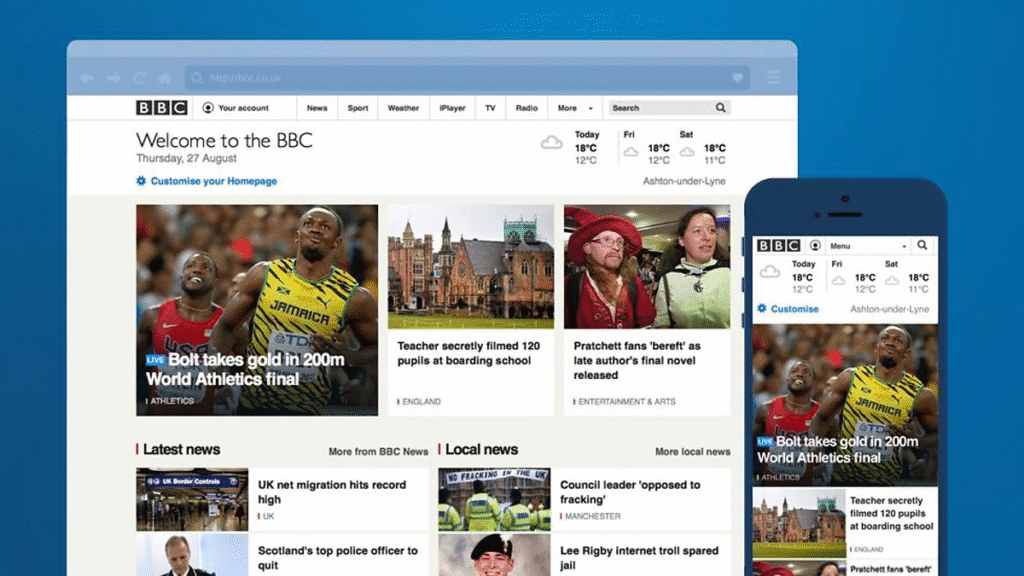
Primary Purpose: Delivering timely, accurate news coverage across topics
Key Features:
- Homepage with latest headlines
- Category sections (world, business, tech, sports, etc.)
- Breaking news alerts and live coverage
- Multimedia content (text, photos, video)
- Author bylines and journalist profiles
- Comment and discussion sections
- Newsletter subscription options
- Mobile apps for on-the-go access
- Search and archive functionality
What Makes It Effective:
BBC News exemplifies digital journalism excellence. Stories update continuously as events unfold. Clear categorization helps readers find topics of interest. Multimedia presentations make stories engaging and accessible. The site balances comprehensiveness with digestibility providing depth without overwhelming readers.
Best For: Media companies, journalists, industry news publishers, local news outlets, or niche publications serving specific interest communities.
Why It Works: Trustworthy, timely information delivered through professional presentation builds audience loyalty and regular return visits.
8. Forum: Reddit
Website Type: Community Discussion Platform
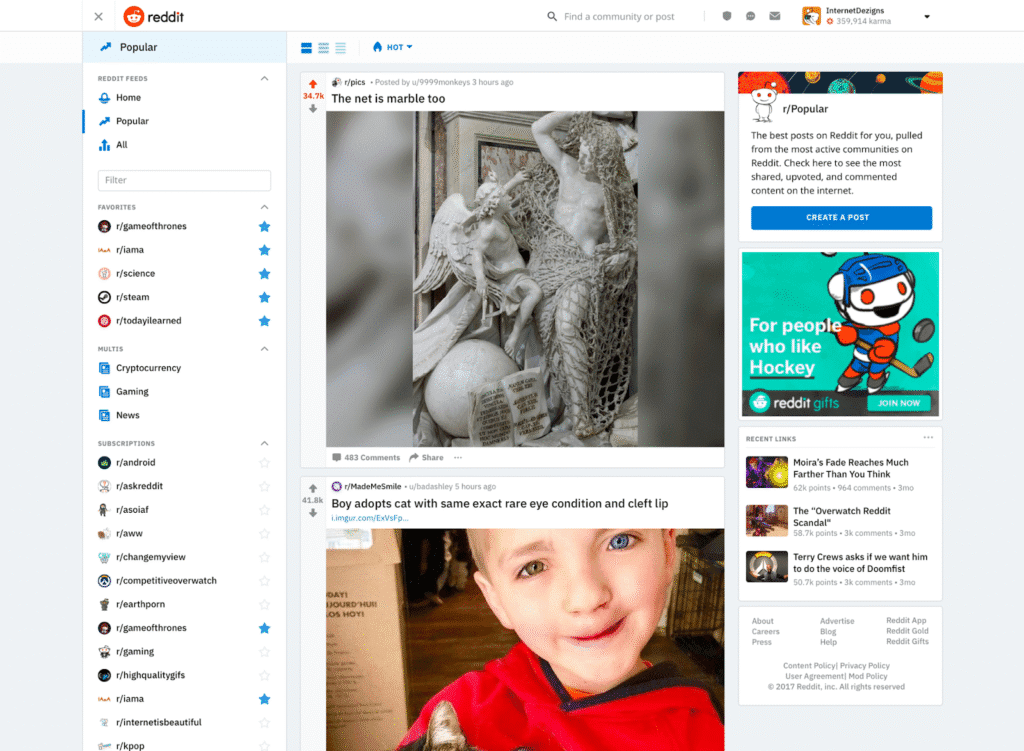
Primary Purpose: Facilitating user-generated discussions and community building
Key Features:
- Threaded discussion organization
- Subreddit (topic-based) structure
- User profiles and reputation systems
- Upvoting/downvoting content moderation
- Search functionality across discussions
- Moderator tools for community management
- Mobile-friendly responsive design
- Real-time updates and notifications
What Makes It Effective:
Reddit demonstrates how powerful community-driven content becomes. User-created subreddits serve every conceivable interest. Democratic voting surfaces valuable content while burying low-quality posts. Active moderation maintains community standards. The platform’s simplicity keeps focus on conversations rather than interface complexity.
Best For: Businesses offering peer-to-peer support, hobbyist communities, professional networks, gaming communities, or any group benefiting from member interaction and knowledge sharing.
Why It Works: User-generated content creates self-sustaining ecosystems requiring minimal publisher effort once critical mass establishes.
9. Membership: Patreon
Website Type: Subscription Membership Platform
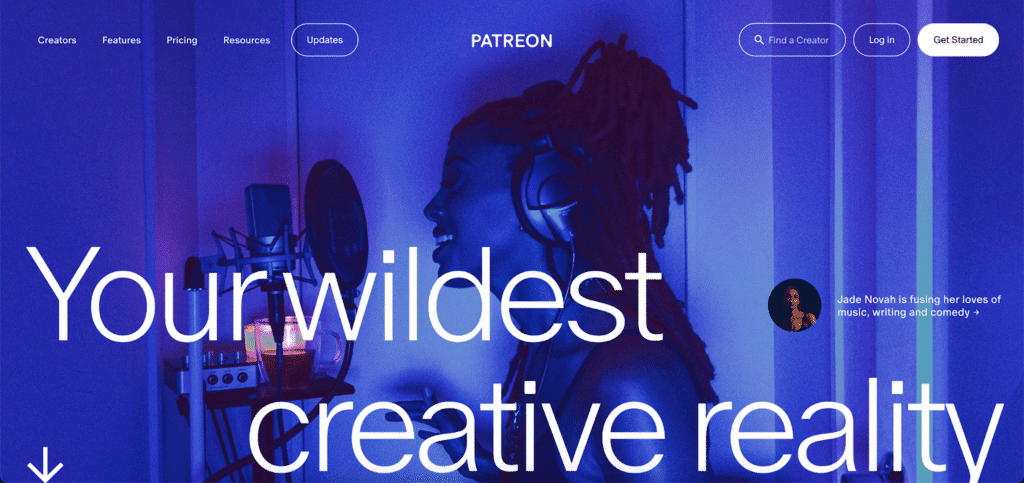
Primary Purpose: Providing exclusive content or services to paying members
Key Features:
- Membership tier structures with different benefits
- Member-only content access controls
- Subscription management and billing
- Member profiles and community features
- Content scheduling and drip-feed options
- Communication tools for member engagement
- Analytics tracking member activity
- Payment processing and payout systems
What Makes It Effective:
Patreon enables creators to monetize audiences through recurring subscriptions. Multiple membership tiers accommodate various supporter commitment levels. Exclusive content rewards loyalty. Direct creator-fan relationships build stronger connections than traditional intermediaries allow. The platform handles complex subscription logistics, letting creators focus on content.
Best For: Content creators, online course providers, exclusive community builders, SaaS products, premium research providers, or anyone monetizing through recurring subscriptions rather than one-time purchases.
Why It Works: Predictable recurring revenue provides financial stability while giving supporters ongoing value justifying continued payments.
10. Social Media: LinkedIn
Website Type: Professional Social Network
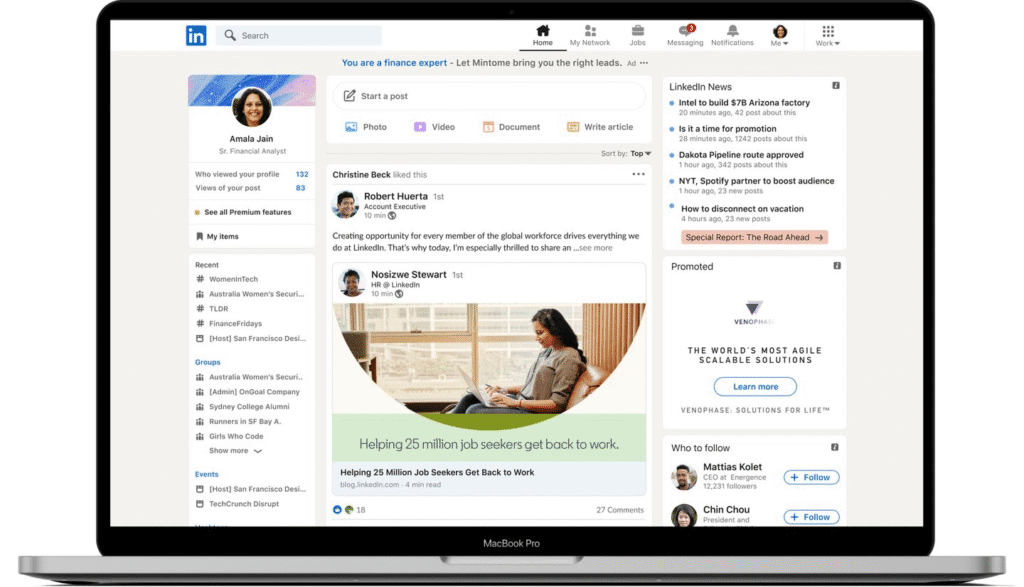
Primary Purpose: Connecting professionals for networking, job seeking, and knowledge sharing
Key Features:
- User profiles with professional information
- Connection/following systems
- News feed with updates from network
- Content creation and sharing capabilities
- Messaging and communication tools
- Groups for interest-based discussions
- Job posting and application functionality
- Company pages for organizations
- Analytics for content performance
What Makes It Effective:
LinkedIn carved out unique positioning as the professional social network. Unlike personal-life-focused competitors, LinkedIn maintains business context. The platform facilitates genuine professional connections, job discoveries, and industry knowledge sharing. Content algorithms surface relevant information based on professional interests rather than personal relationships alone.
Best For: Professional networking, B2B marketing, recruiting and hiring, thought leadership building, or any professional service benefiting from network effects.
Why It Works: Network effects create exponentially increasing value the more professionals join, the more valuable the platform becomes for everyone.
11. Nonprofit: Charity: Water
Website Type: Nonprofit Organization Site
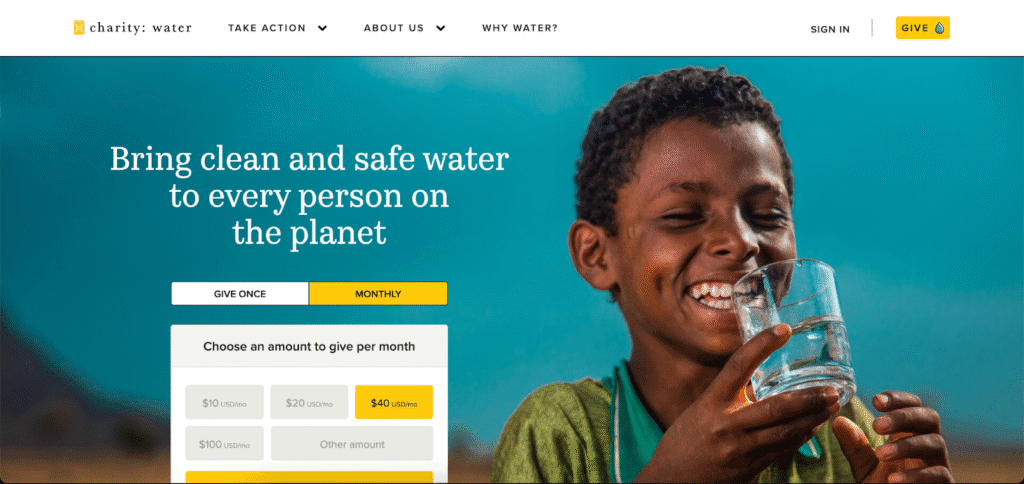
Primary Purpose: Raising awareness, inspiring action, and collecting donations for charitable causes
Key Features:
- Mission and impact statements
- Donation forms with multiple giving options
- Volunteer opportunity information
- Success stories and project updates
- Financial transparency and annual reports
- Event calendars and campaign information
- Newsletter signups for supporters
- Social sharing capabilities
What Makes It Effective:
Charity: Water transforms typical nonprofit web experiences through compelling storytelling and radical transparency. Powerful photography and videos create emotional connections. Project tracking shows exactly where donations go. Impact statistics demonstrate measurable outcomes. The donation process remains simple and trustworthy, removing friction between inspiration and action.
Best For: Charitable organizations, foundations, advocacy groups, religious organizations, community initiatives, or any mission-driven entity requiring public support.
Why It Works: Emotional storytelling combined with operational transparency builds trust, inspiring supporters to contribute time and money toward causes they believe in.
Similar to how web design and development agency work balances aesthetics with functionality, nonprofit sites must inspire emotion while facilitating practical actions.
12. Directory: Yelp
Website Type: Business Directory and Review Platform
Primary Purpose: Helping users discover and evaluate local businesses
Key Features:
- Comprehensive business listings
- Search and filtering by category, location, rating
- User reviews and ratings
- Business photos and information
- Map integration showing locations
- Claiming and managing business listings
- Reservation or booking capabilities
- Mobile apps for on-the-go discovery
What Makes It Effective:
Yelp revolutionized local business discovery through user-generated reviews. Comprehensive listings provide everything consumers need hours, location, photos, menus, reviews. Search functionality quickly narrows results. Map integration helps with physical discovery. The platform benefits both consumers seeking services and businesses gaining visibility.
Best For: Local business aggregation, industry-specific directories (real estate, restaurants, services), professional directories (lawyers, doctors), or product comparison sites.
Why It Works: Aggregating information consumers would otherwise search multiple sources to find creates valuable one-stop discovery experiences.
13. Entertainment: Netflix
Website Type: Streaming Entertainment Platform

Primary Purpose: Delivering on-demand video content for entertainment
Key Features:
- Extensive content libraries with intuitive browsing
- Personalized recommendations based on viewing history
- Multiple user profiles per account
- Continue watching functionality
- Search across titles, genres, actors
- Offline viewing capabilities (mobile apps)
- Parental controls and content ratings
- Original content production and exclusives
What Makes It Effective:
Netflix transformed entertainment consumption through unprecedented convenience and personalization. Algorithm-driven recommendations surface content matching individual preferences. Binge-friendly interfaces encourage extended engagement. Original content creates platform exclusivity. The service works flawlessly across devices, meeting users wherever they consume content.
Best For: Media streaming services, entertainment platforms, video-on-demand services, music platforms, podcast networks, or digital entertainment in any format.
Why It Works: Convenience, personalization, and quality content combine creating sticky services users integrate into daily routines rather than occasional visits.
14. Personal: Gary Vaynerchuk
Website Type: Personal Brand Website
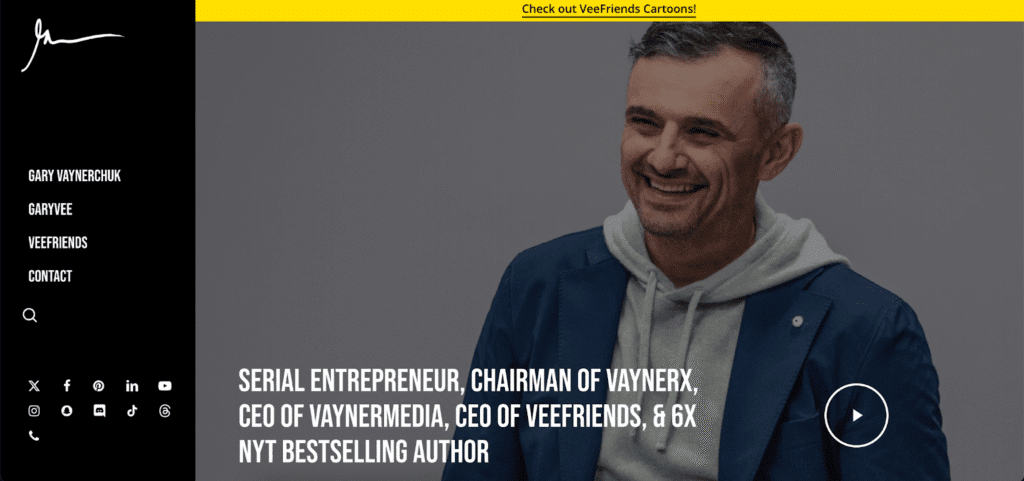
Primary Purpose: Establishing personal brand, sharing content, and building audience
Key Features:
- Personal biography and story
- Content aggregation (blog, videos, podcasts)
- Speaking engagement information
- Book and product promotion
- Social media integration and feeds
- Email newsletter signup
- Media kit for press and partners
- Contact information for opportunities
What Makes It Effective:
Gary Vaynerchuk’s site centralizes his multi-platform presence. Rather than forcing followers to track him across dozens of channels, the site aggregates everything in one location. Clear sections organize various content types. The design reflects his bold, energetic personality. Conversion points guide visitors toward desired actions following, subscribing, purchasing, or booking.
Best For: Entrepreneurs, authors, speakers, influencers, coaches, consultants, or any professional building personal brand beyond their company affiliation.
Why It Works: Centralized presence gives you full control over brand presentation and audience relationships independent of algorithm-controlled social platforms.
15. SaaS Product: Notion
Website Type: Software-as-a-Service Product Site
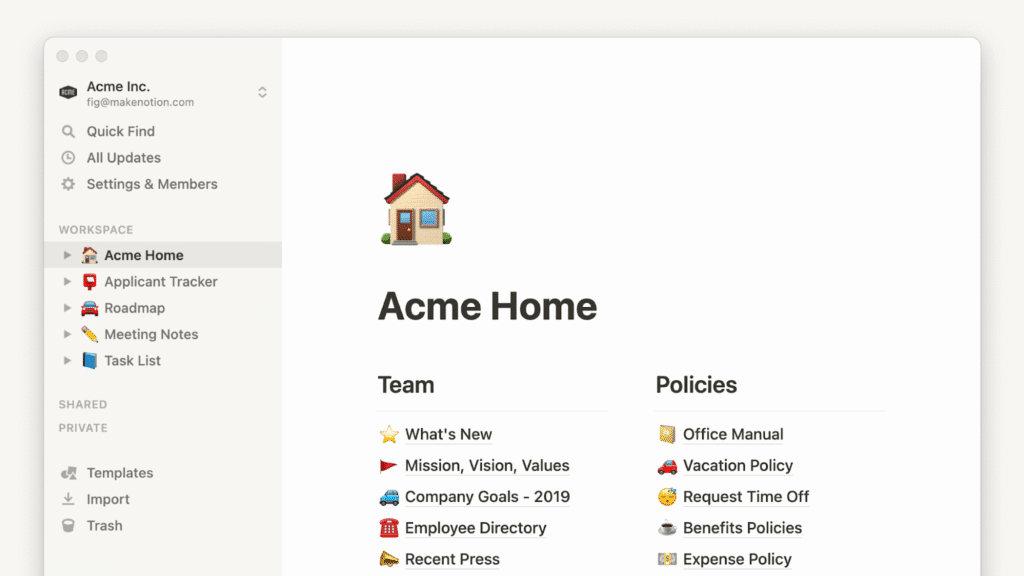
Primary Purpose: Explaining product value and converting trials to paid subscriptions
Key Features:
- Clear product demonstrations (screenshots, videos, tours)
- Use case explanations for different audiences
- Pricing tiers with feature comparisons
- Free trial or freemium signup
- Customer testimonials and case studies
- Integration showcase with other tools
- Comprehensive documentation and support
- Blog with tips and best practices
What Makes It Effective:
Notion’s website brilliantly communicates a complex, flexible product. Rather than overwhelming visitors with every feature, they lead with core value propositions. Use case examples help prospects envision applications. Interactive demos let visitors experience the product before committing. The free tier removes barriers to trial. Community-created templates demonstrate versatility.
Best For: Software companies, web application products, platform services, API providers, or any technology product sold through subscriptions.
Why It Works: Reducing perceived risk through free trials while clearly communicating value accelerates conversion from curious visitors to paying customers.
Understanding how web development principles apply to SaaS products ensures technical excellence matches product innovation.
Essential Features by Website Type
Different website categories require specific functionality for success:
E-Commerce Essentials
- Product management systems
- Shopping cart and checkout
- Payment gateway integration
- Inventory tracking
- Shipping calculators
- Order management
- Customer accounts
Business Site Necessities
- Service descriptions
- About and team pages
- Contact forms
- Testimonials/case studies
- Blog for content marketing
- Clear call-to-actions
- Mobile responsiveness
Portfolio Requirements
- Project galleries
- Case study presentations
- About/bio sections
- Contact information
- Resume/CV download
- Client testimonials
- Work process explanation
Blog Fundamentals
- Content management system
- Category organization
- Author profiles
- Comment systems
- Social sharing
- Email subscription
- Search functionality
Membership Features
- User authentication
- Gated content
- Subscription management
- Member profiles
- Community forums
- Content delivery
- Analytics dashboards
Each website type demands specific technical infrastructure. Working with creative web agency professionals ensures you get essential functionality without unnecessary bloat.
Common Website Type Selection Mistakes
Avoid these pitfalls when choosing your website format:
Copying Competitors Without Understanding Why
Just because competitors use specific website types doesn’t mean those choices fit your unique circumstances, resources, or goals. Understand the strategic reasoning behind format selection rather than blindly imitating.
Choosing Based on Personal Preference Over User Needs
Your aesthetic preferences matter less than what serves your audience effectively. Portfolio sites might look cooler than business sites, but if you’re selling services rather than showcasing work, functionality trumps flair.
Overcomplicating When Simple Suffices
Not every business needs e-commerce, membership, forums, and blogs simultaneously. Start with essential functionality serving your primary goal, expanding only when genuine need emerges.
Underestimating Maintenance Requirements
Complex website types demand ongoing effort. Membership sites need continuous new content. Forums require active moderation. E-commerce demands inventory management. Ensure you can sustain required maintenance before committing.
Ignoring Mobile Usage Patterns
Different website types see varying mobile vs desktop usage. E-commerce and local business sites skew heavily mobile. Some B2B research happens primarily on desktop. Design for your audience’s actual device usage.
Neglecting Scalability Planning
Rebuilding websites entirely because you outgrew initial choices wastes resources. Select platforms and architectures accommodating reasonable growth scenarios even if you start small.
Frequently Asked Questions
What’s the most popular type of website?
Business websites represent the most common category, followed closely by blogs and e-commerce sites. Business sites serve companies of all sizes communicating with customers, while blogs provide content marketing channels for individuals and organizations. E-commerce continues rapid growth as commerce shifts online. However, “most popular” doesn’t mean “best for you” choose website types matching your specific goals rather than following trends. Working with website development company professionals helps identify optimal formats for your unique situation regardless of popularity.
Can I combine multiple website types?
Absolutely hybrid approaches often prove most effective. An e-commerce site can include a blog for content marketing. A business site might add membership areas for premium clients. Portfolio sites often integrate blogs sharing process insights. The key is ensuring each component serves strategic purposes rather than adding complexity for its own sake. Start with your primary function, then thoughtfully add secondary features supporting core goals. Avoid feature bloat making sites confusing every addition should clearly enhance user experience or business outcomes.
How do I know which website type I need?
Start by defining your primary objective: Are you selling products (e-commerce), generating leads (business/landing page), showcasing work (portfolio), sharing knowledge (blog/educational), or building community (forum/social)? Your core goal determines base website type. Next, consider your audience’s expectations and needs. Finally, evaluate available resources for ongoing maintenance. The right type balances your objectives, audience expectations, and sustainable management capabilities. When uncertain, UX design experts can assess requirements and recommend appropriate formats through discovery processes.
Do different website types require different platforms?
Yes, certain platforms excel at specific website types. WordPress dominates blogs and content sites. Shopify and WooCommerce lead e-commerce. Memberful and MemberPress support membership sites. However, many platforms accommodate multiple types through extensions and customization. WordPress powers everything from simple blogs to complex membership communities. Webflow enables diverse builds from portfolios to business sites. The platform choice depends on your specific requirements, technical comfort, budget, and growth plans more than website type alone. Evaluate platforms based on your complete feature needs rather than generic categories.
How much does it cost to build different website types?
Costs vary dramatically based on complexity and approach. Simple blog or portfolio sites using templates might cost $500-$3,000. Custom business websites typically range $3,000-$15,000. E-commerce sites start around $5,000 and can exceed $50,000 for extensive catalogs and custom features. Membership platforms range $10,000-$40,000 depending on functionality. DIY approaches using website builders (Wix, Squarespace, Shopify) cost $12-$40 monthly plus setup time. Development costs matter less than ongoing value delivered a $15,000 website generating $200,000 annual revenue proves far more valuable than a $2,000 site producing minimal results. Focus on ROI rather than absolute cost.
Ready to Build Your Perfect Website?
Understanding website types transforms vague ideas into concrete action plans. Whether you need e-commerce functionality, portfolio presentation, content marketing platforms, or community building spaces, knowing your category provides direction for every subsequent decision from platform selection to feature prioritization to design approaches.
The examples explored in this guide demonstrate that successful websites balance form and function, aesthetics and usability, creativity and strategy. Each website type serves distinct purposes requiring specific features, but all exceptional sites share common foundations: clear objectives, user-centered design, intuitive navigation, mobile optimization, and ongoing refinement based on actual usage patterns.
Don’t let analysis paralysis prevent action. Start with your primary goal, choose the website type best serving that objective, and execute well rather than pursuing perfect. Websites evolve you can always add functionality, refine positioning, or expand scope as your needs grow and clarify.
Let’s Build Something Exceptional Together
At Web Guider Agency, we help businesses and individuals identify optimal website types for their unique goals, then design and develop solutions that actually deliver results. Whether you need simple portfolio elegance, robust e-commerce functionality, or complex membership platforms, we bring strategic thinking and technical expertise to every project.
From initial discovery through web design services to ongoing optimization SEO, we’re your partner in creating digital experiences that work as hard as you do. We don’t just build websites we create strategic assets driving business growth.
Book a free consultation to discuss your vision and discover which website type best serves your objectives. View our projects to see diverse website types we’ve created for clients across industries.
Ready to get started? Contact us today and let’s create your perfect website together.
About Web Guider Agency: Web Guider Agency is your trusted web design studio combining strategic thinking with creative excellence and technical expertise. We help entrepreneurs, businesses, and organizations build websites that don’t just look great they deliver measurable results aligned with your goals. Contact us to transform your vision into digital reality.